There are so many different types of media that can be used to relay information to others. Why don’t we take a look at some of the similarities and differences between four common media sources: social media blogging, magazine articles, radio spots, and television.
Social Media Blog
A blog is a type of online journal, short for web log. Blogs can be created by any person for any reason; they are informal writings that are meant to be informative or entertaining (Marsh, Guth, & Short, 2009). Many blogs are written by individuals who want to share their knowledge or opinions with the world, but blogs can be beneficial to companies as well. Many companies have people that write blog posts about the company and what is happening within. Although there are so many different ways for a company to share news with its audience, blogs are more of a non-traditional source that can reach a wider audience.
Blogs also give companies a way to interact with their audience and find out the opinions of their consumers first-hand. At the end of each post on a blog is a comment section, anyone who reads the blog is able to leave a comment with their opinion. The comments can be read by those who write/design the blog, which can then reply directly to the consumer. This is much more personable than traditional sources of media that do not allow any direct interaction. Another useful part of blogs is the ability to add links to other sources of information: other company websites, videos, images, other blogs, etc.

One important aspect of blogging is to keep the readers coming back; in order to do this blogs “must be updated frequently; many are updated daily” (Marsh, Guth,& Short, 2009, p. 109). Blog writers need constant, or at least frequent content that is informal, easy to read and navigate, and interesting to the readers.
Magazine Article
A magazine article can be similar to a blog in the sense that it is also written to be informative or entertaining. Generally, magazine articles are fairly short and meant to be read in one sitting (Marsh, Guth, & Short, 2009). Most magazines are targeted to a specific audience – there are magazines about health & fitness, cooking, wedding planning, gardening, hunting & fishing, etc.; the list goes on and on. Since most magazines are targeted towards a specific audience, the article should be related to the main magazine topic.
Even though the article is likely to be a topic of interest to the reader, the author still needs to make sure they can catch the audience’s attention right away. If the reader is not informed or entertained quickly in the beginning of the article, the chances of them continuing to read are slim.
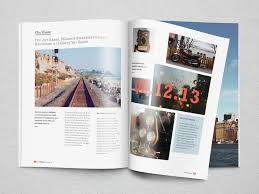 One big difference between blogs and magazine articles is the frequency. While blogs need to be updated very frequently, magazines are only issued once a week, or many even once a month. Since the articles are not distributed frequently, the information in the magazine articles will not be used to announce breaking news (Marsh, Guth, & Short, 2009). Instead, the companies could use magazine articles to write about contributions they have made to the community, any outstanding achievements the company, or its employees, have recently received, or a discussion of new products that will be released soon, or have recently been released.
Radio
Radio spots are generally used by companies for advertisements. Like mentioned for magazine articles, it is important for the radio spot to grab the attention of the listener quickly. Radio spots are limited in time, some down to a mere 10 seconds, and they are fleeting – the listener “cannot replay or re-read” the message (Marsh, Guth, & Short, 2009, p. 139). On top of that, the radio message only reaches one of our senses, hearing. With a momentary message only reaching one sense, it is vital to grab the audience’s attention and make them want to listen.

Another similarity to magazine articles is that radio stations are generally targeted towards different audiences. An audience member that enjoys a hard rock station is going to be targeted differently from someone who enjoys a country music station, and both would be targeted differently from someone who listens to talk radio. Although it is possible for the company to advertise on all three of these stations, the approach would need to be different in each case. The company would need to figure out a technique or dialogue that would be interesting to the audience and grab their attention.
Television
Television, mainly used by companies for advertisements or commercials, is a very effective use of reaching an audience, and also “the most expensive medium” (Marsh, Guth,& Short, 2009, p. 144). Much like the radio, the television message is fleeting – meaning it cannot be replayed or re-read; yet, the television commercials are able to gain more responsiveness from the audience because they require more attention than a radio spot (Marsh, Guth, & Short, 2009). As in each case, the television advertisement needs to quickly be able to grab the audience’s attention with the visuals, movements, dialogue, sound effects and music.

The last few media outlets we discussed were targeted towards a general audience. This is not as prevalent in television. Many television channels show a variety of show and movies, leaving it impossible to group its audience into a specific label. Because of this, advertisers generally choose specific time slots for their advertisements to run based on the content that is being aired at that time. For example, you may see more advertisements for beer and snacks during a football game, or advertisements for college/trade schools during daytime talk shows. The company needs to determine the best place for their advertisements to reach their target audience.
Marsh, C., Guth, D.W., Short, B.P. (2009). Strategic Writing: Multimedia Writing for Public Relations, Advertising, and More (2nd ed.). Boston, MA: Pearson Education, Inc.
Social Media Blog
A blog is a type of online journal, short for web log. Blogs can be created by any person for any reason; they are informal writings that are meant to be informative or entertaining (Marsh, Guth, & Short, 2009). Many blogs are written by individuals who want to share their knowledge or opinions with the world, but blogs can be beneficial to companies as well. Many companies have people that write blog posts about the company and what is happening within. Although there are so many different ways for a company to share news with its audience, blogs are more of a non-traditional source that can reach a wider audience.
Blogs also give companies a way to interact with their audience and find out the opinions of their consumers first-hand. At the end of each post on a blog is a comment section, anyone who reads the blog is able to leave a comment with their opinion. The comments can be read by those who write/design the blog, which can then reply directly to the consumer. This is much more personable than traditional sources of media that do not allow any direct interaction. Another useful part of blogs is the ability to add links to other sources of information: other company websites, videos, images, other blogs, etc.
One important aspect of blogging is to keep the readers coming back; in order to do this blogs “must be updated frequently; many are updated daily” (Marsh, Guth,& Short, 2009, p. 109). Blog writers need constant, or at least frequent content that is informal, easy to read and navigate, and interesting to the readers.
Magazine Article
A magazine article can be similar to a blog in the sense that it is also written to be informative or entertaining. Generally, magazine articles are fairly short and meant to be read in one sitting (Marsh, Guth, & Short, 2009). Most magazines are targeted to a specific audience – there are magazines about health & fitness, cooking, wedding planning, gardening, hunting & fishing, etc.; the list goes on and on. Since most magazines are targeted towards a specific audience, the article should be related to the main magazine topic.
Even though the article is likely to be a topic of interest to the reader, the author still needs to make sure they can catch the audience’s attention right away. If the reader is not informed or entertained quickly in the beginning of the article, the chances of them continuing to read are slim.
Radio
Radio spots are generally used by companies for advertisements. Like mentioned for magazine articles, it is important for the radio spot to grab the attention of the listener quickly. Radio spots are limited in time, some down to a mere 10 seconds, and they are fleeting – the listener “cannot replay or re-read” the message (Marsh, Guth, & Short, 2009, p. 139). On top of that, the radio message only reaches one of our senses, hearing. With a momentary message only reaching one sense, it is vital to grab the audience’s attention and make them want to listen.
Another similarity to magazine articles is that radio stations are generally targeted towards different audiences. An audience member that enjoys a hard rock station is going to be targeted differently from someone who enjoys a country music station, and both would be targeted differently from someone who listens to talk radio. Although it is possible for the company to advertise on all three of these stations, the approach would need to be different in each case. The company would need to figure out a technique or dialogue that would be interesting to the audience and grab their attention.
Television
Television, mainly used by companies for advertisements or commercials, is a very effective use of reaching an audience, and also “the most expensive medium” (Marsh, Guth,& Short, 2009, p. 144). Much like the radio, the television message is fleeting – meaning it cannot be replayed or re-read; yet, the television commercials are able to gain more responsiveness from the audience because they require more attention than a radio spot (Marsh, Guth, & Short, 2009). As in each case, the television advertisement needs to quickly be able to grab the audience’s attention with the visuals, movements, dialogue, sound effects and music.
The last few media outlets we discussed were targeted towards a general audience. This is not as prevalent in television. Many television channels show a variety of show and movies, leaving it impossible to group its audience into a specific label. Because of this, advertisers generally choose specific time slots for their advertisements to run based on the content that is being aired at that time. For example, you may see more advertisements for beer and snacks during a football game, or advertisements for college/trade schools during daytime talk shows. The company needs to determine the best place for their advertisements to reach their target audience.
Marsh, C., Guth, D.W., Short, B.P. (2009). Strategic Writing: Multimedia Writing for Public Relations, Advertising, and More (2nd ed.). Boston, MA: Pearson Education, Inc.

No comments:
Post a Comment